

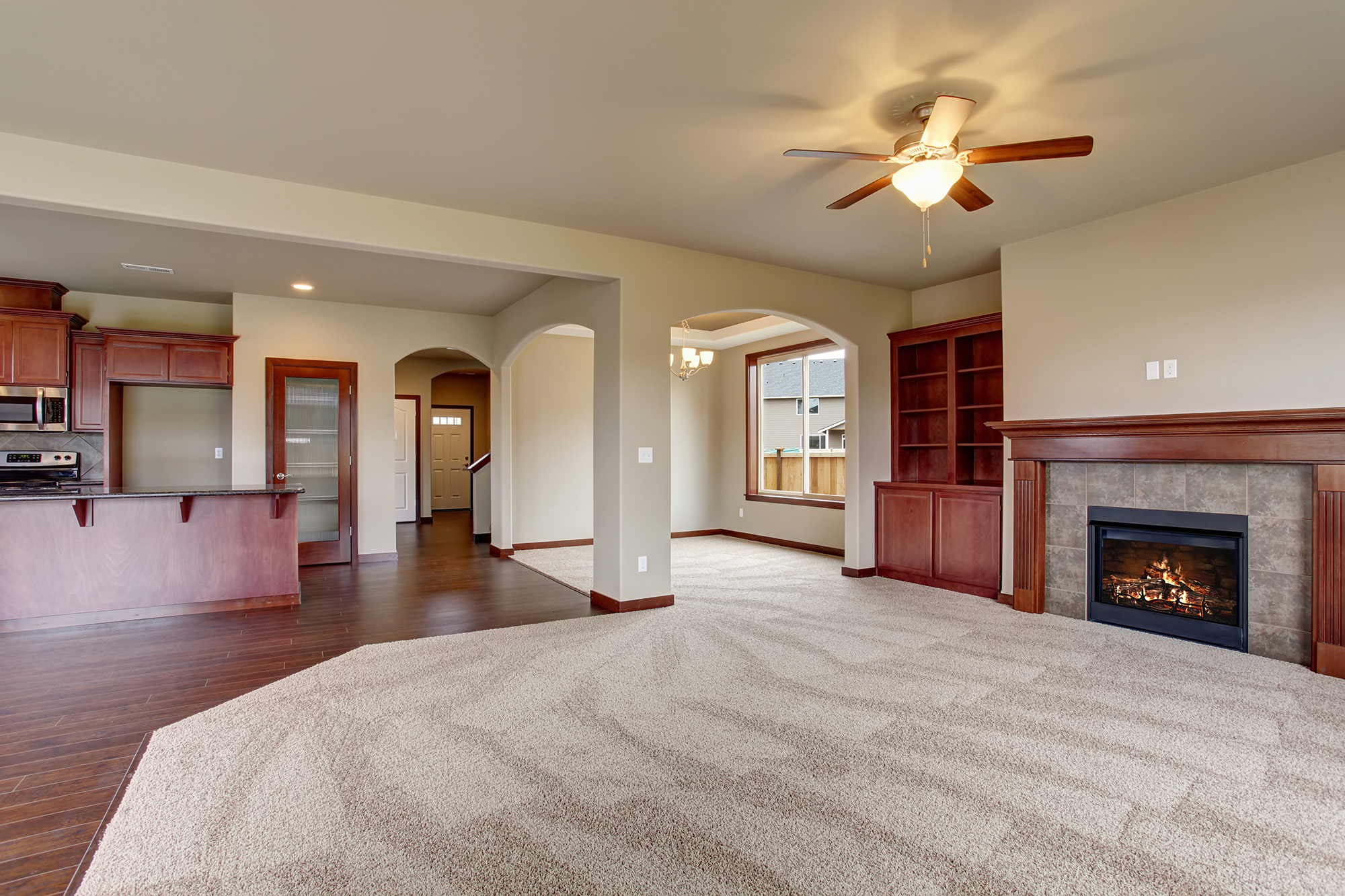
When homeowners replace flooring throughout a house, there is often an instinct to choose one material and install it everywhere. It sounds simpler. It creates consistency. But a home does not use every room in the same way, so why should every room necessarily have the same floor?
Laminate and carpet can serve completely different purposes. Laminate can create a continuous, wood-inspired appearance through active living spaces, while carpet can bring softness, quietness, and warmth to bedrooms and other areas where comfort matters most.
Instead of choosing one material for the entire house, consider building a flooring plan around how each room is actually used.
The Entryway: Think About the First Few Feet
The entry is one of the most demanding areas of a home. Shoes, dust, bags, pets, visitors, and outdoor debris all converge here.
In El Paso, where dry desert conditions and wind can contribute to dust exposure, the entry deserves special consideration. A hard surface can provide a practical transition zone before softer flooring begins deeper inside the home.
If laminate is being considered near an entry, follow the specific product's installation and moisture requirements and use appropriate mats or entry systems to reduce the amount of outdoor debris reaching the floor.
The Living Room: Let the Floor Set the Tone
The living room is usually one of the most visible areas in the house, making it an excellent place for a flooring material that establishes the overall design.
Laminate can provide a wood-inspired appearance that works with contemporary, transitional, and traditional furniture. A medium natural wood tone can create warmth without dominating the room, while a lighter finish can make a smaller space feel brighter.
If the living room is primarily a relaxation space and you want a softer atmosphere, carpet can achieve something completely different. The choice depends on whether the room's identity is built around architectural appearance or physical comfort.
The Bedroom: Comfort Becomes More Important
Bedrooms are different. They generally have lower traffic than the main circulation areas, and many homeowners want them to feel quieter and softer.
This is where carpet can make a strong argument. A comfortable carpet can soften footsteps, create warmth under bare feet, and give the room a more intimate character.
Color matters too. Bedrooms often benefit from calm neutrals, subtle textures, and patterns that can work with bedding and furniture without competing for attention.
The Home Office: Consider Sound and Atmosphere
A home office needs to function differently from a kitchen or hallway. Video calls, concentration, reading, and long periods at a desk can make the acoustic quality of the room surprisingly important.
Carpet can help soften sound within a room, while laminate can create a cleaner, more architectural appearance. Either can work, but the choice should be based on how the office is used.
If the office is also a guest room, for example, carpet may provide a more versatile comfort-oriented environment. If it is primarily a design-focused workspace, laminate may better suit the desired aesthetic.
The Family Room: Durability Meets Design
Family rooms often receive more activity than homeowners initially expect. People move between the kitchen, living area, backyard, and bedrooms, creating constant circulation.
Laminate can be appealing here because it can deliver a wood-inspired appearance while providing a different maintenance profile from natural hardwood. Product specifications vary, so the appropriate choice should be based on the exact product's traffic and care recommendations.
Carpet can also work when softness and sound reduction are higher priorities. In households with young children, the underfoot experience may be more important than having a hard surface throughout the main living area.
The Hallway: The Forgotten Flooring Decision
Hallways often receive some of the highest foot traffic in the home, yet they are frequently treated as an afterthought.
If the hallway connects several rooms, maintaining a consistent flooring surface can make the home feel more cohesive. Laminate can be particularly effective when it runs continuously from the hallway into adjoining living spaces.
If carpet is used in adjacent bedrooms, a carefully planned transition can create a natural boundary without making the home feel visually disconnected.
Think About the Climate When Planning the Whole House
El Paso's climate introduces considerations that should be addressed before choosing either laminate or carpet. The city has hot summers, dry winters, low humidity, abundant sunlight, and periodic dust storms.
For laminate installations, the product's requirements for acclimation, expansion, subfloor conditions, and installation environment should be followed carefully. Local flooring guidance also identifies heat, dry air, dust, and slab conditions as important considerations for flooring in El Paso.
For carpet, the climate reinforces the importance of choosing an appropriate fiber and construction and establishing a realistic cleaning routine. Dust and debris should be managed through regular vacuuming, entry mats, and prompt treatment of spills.
Why One Flooring Material Does Not Have to Win
There is no rule saying that laminate and carpet are competitors where one must replace the other. They can work together.
Imagine a home with laminate extending through the entry, hallway, dining area, and main living space, while bedrooms use carpet. The result can feel intentional rather than inconsistent. The hard surface creates continuity where circulation is highest, while carpet provides a softer environment where comfort matters more.
The key is coordination. Choose colors that share compatible undertones, repeat similar design cues, and make transitions feel deliberate.
Build the Palette Before Choosing Every Room
Start by choosing an overall color direction. Do you want warm wood tones and warm neutral carpet? Cooler contemporary flooring? A light, airy palette? A darker, richer interior?
Once that direction is established, individual rooms can have their own character without feeling disconnected.
This is much more effective than choosing every floor independently and trying to make everything match after the fact.
Compare Real Samples Together
Bring laminate and carpet samples into the same room. Place them beside your existing furniture, cabinetry, walls, and trim. Look at the combination under natural and artificial lighting.
Pay attention to undertones. A laminate with a strongly red or orange wood tone may need a different carpet palette from a pale neutral oak look. Small details can make the difference between a flooring plan that feels professionally designed and one that feels assembled piece by piece.
Start With the Rooms That Matter Most
You do not have to replace every floor simultaneously. If budget or scheduling makes a whole-home project unrealistic, begin with the rooms that need the most attention.
Replacing worn bedroom carpet can immediately improve comfort. Updating an outdated main living floor can transform the appearance of the entire home. Once the first phase is complete, future rooms can be selected to complement the new flooring.
Explore the Two Materials Side by Side
If you are planning a flooring project in El Paso, compare the laminate flooring selection from Casa Carpet Wholesale Distributors with the available carpet flooring options to see how different materials can serve different rooms.
Before ordering materials, discuss the project as a whole rather than treating each room as an isolated decision. Contact Casa Carpet Wholesale Distributors to discuss your flooring needs, compare options, and build a plan around the way your home is actually used.
The most successful flooring plan is rarely the one that forces every room into the same solution. It is the one where every floor has a purpose, every transition feels intentional, and the entire home still feels like one connected space.


